Friday, 10 January 2014

Y13 Geog: Desolation of smog (Tackling China's air quality crisis)

Officials in China say they are confident green technology will help overcome the country's notoriously polluted air.
Apocalyptic scenes of dense smog have recently forced major cities including Shanghai and Harbin to virtually shut down.
The capital Beijing is among urban areas where pollution routinely exceeds safety limits set by the World Health Organization (WHO).
For more information:

LECTURE ON TUESDAY


2 minute Video of mud volcano by Iain Stewart: 
http://m.youtube.com/watch?v=kphF71S5F0Q

For info click the link:
http://gallery.mailchimp.com/78c1ed22b5890ffa0663455cb/files/2014_01_14_Lusi_Mud_volcano.pdf

Sign up on Geog & Geol Lecture sign up googledoc
Depart 1700
Return 2030
PLEASE SIGN UP ON GOOGLE DOC

Thursday, 9 January 2014

PLYMOUTH CONFERENCE URGENT!!!

Dear all,

Booking has opened for a one day conference at Plymouth Uni about Tectonic hazards.

Iain Stewart is introducing the conference and doing the last talk of the day.

SATURDAY 1st MARCH. LEAVE WELLS 0730, RETURN APPROX 1800

If you would like to come, subsidised cost £10, please let me know by lunchtime tomorrow. I hope there are still places available, one in November sold out in 3 hours!

If you are a 1stXI or 1stVII player I guess you won't be able to come.

Mr R

Tuesday, 7 January 2014

Early Life built Earth's Continents

REWIND Earth's story 3 or 4 billion years, to when life was emerging. The surface of our planet was starting to cool but still piping hot – possibly about 200 °C. Early, unstable continents may have been forming. Now imagine life doesn't emerge, and press play.
The pair included biological weathering in one modelled Earth, and left it out of another. Press play on both Earths at 4 billion years ago, and for the first 1.5 billion years, there is very little difference between them. By about 2.5 billion years ago, early continental plates emerge above the ocean, regardless of life. But then, everything diverges.
On live-Earth, algae, bacteria and more complex life colonise the new land, erode it and dump masses of sediment into the ocean. The sediment – 40 per cent water by weight – is eventually pulled down more than 100 kilometres beneath the surface by early subducting tectonic plates, where piping hot temperatures release the trapped water. The hydrated mantle is viscous and more buoyant, so it rises and bursts through the surface in volcanic eruptions that add to the continental plate. 

Saturday, 4 January 2014

SPECTACULAR CLIFF COLLAPSE

A camera captures the moment that a cliff partially collapses during rough seas in Rock-A-Nore outside Hastings in East Sussex

Click the link to watch the video:

Wednesday, 1 January 2014

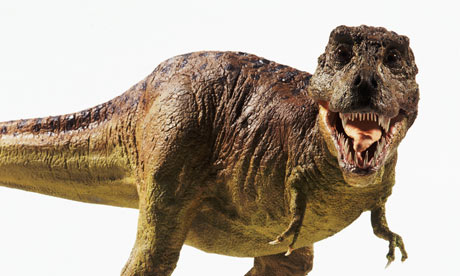
AMAZING T-REX OPTICAL ILLUSION


TV PROGRAMMES ON 1st JAN

Happy New Year!

On BBC iPlayer and repeated tonight (1st Jan) BBC4 Krakatoa Revealed (starts at Midnight). Recommended by James V.


More 4  
2200  Japan's Tsunami: How it happened  (repeated 2nd Jan 0115)
2300  Meteor Strike - Fireball from Space (repeated 2nd Jan 0220)