Friday, 15 November 2013

GEOLOGY ANIMATIONS


These animations help to illustrate key features in geology. 
Follow the hyperlinks. 
The webpage can be found at: 
http://highered.mcgraw-hill.com/sites/0072826894/student_view0/animations.html


Thursday, 14 November 2013

Monday, 11 November 2013

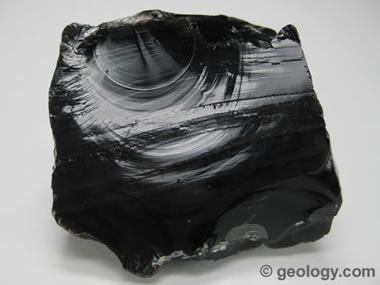
OBSIDIAN LAVA: STILL FLOWING AFTER A YEAR!

An explosive volcanic eruption in Chile has given scientists the first direct insight into the strange motion of rocky lava known as obsidian flow.

Initially, the lava advanced several metres per day, then as its thick rocky crust cooled, it slowed. But, according to Dr Tuffen's data, over a year after the eruption, the lava was still advancing at a rate of 1.5m to 3m per day.

http://www.bbc.co.uk/news/science-environment-24821494
http://www.livescience.com/26919-obsidian-lava-chile-volcano.html

Monday, 4 November 2013

The Avon Gorge: Thrusting under our noses


In Bristol, perhaps our greatest geological asset is the Avon Gorge. At the end of the Last Glacial Maximum, torrents of icy meltwater scoured out a 2.5km long gouge through a series of Devonian and Carboniferous limestones and sandstones. The bottom of the 90m deep gorge is now filled with the River Avon and the sheer cliffs of the north side are home to fossil corals, rare plantsand challenging climbing routes; they also expose an excellent thrust fault.

This particular example lies at the intersection between Bridge Valley Road and the Portway, just underneath the Clifton Suspension Bridge (see here for map). Compressional forces associated with the formation of the supercontinent Pangea (~290 Ma) caused the the older Clifton Down Limestone to be thrust over the younger Upper Cromhill Sandstone. Friction along the overhanging fault plane deformed the younger sediments, and the resulting instability of the rock face has caused major issues for the adjacent roads.

Thrust fault in the north side of the Avon Gorge where the older grey Clifton Down Limestone (right) has been thrust over the younger red Upper Cromhall Sandstone (left); the intensity and friction of the thrusting is manifest in the deformation of the younger sediments. The fault outcrops at the intersection between Bridge Valley Road the Portway (A4) and is conveniently located adjacent to set of traffic lights and a cycle path – look out for it next time you’re stuck on a red light or peddling past.
This post was originally featured on the University of Bristol Earth Sciences PhD blog "Between a rock and a hard place" http://betweenarock.co.uk/fieldwork/science-snap-7-thrusting-under-our-noses/

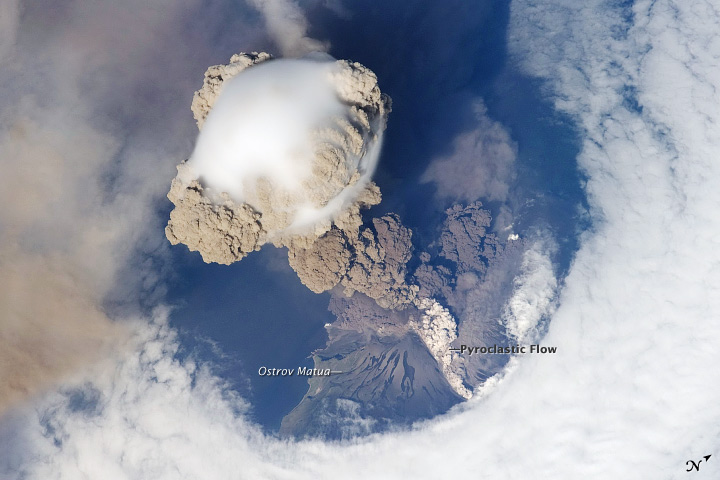
VOLCANO FROM SPACE STATION

This image, obtained by the International Space Station, provides a unique view of Sarychev Volcano (Kuril Islands, northeast of Japan) in the early stages of an eruption on June 12, 2009. 
To download a large still photo or the movie from the NASA Earth Observatory Website, go to: 
http://earthobservatory.nasa.gov/IOTD/view.php?id=38985

If it doesn't work, check out the link to the 'Earth Science Guy' on the right side of the blog.

Sunday, 3 November 2013

PLANET EARTH TV PROGRAMME

Geologist and part time Top Gear presenter 
Richard Hammond is on TV tonight (Sunday) at 9pm with a programme about how to build planet Earth.

Thursday, 17 October 2013

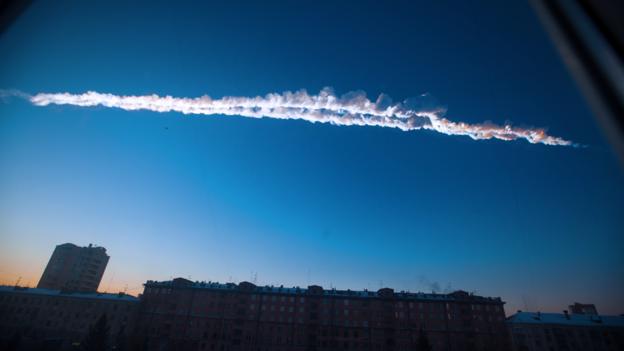
RUSSIAN METEORITE

Divers working at a Russian lake have recovered a half-tonne chunk of the space rock that exploded over Chelyabinsk earlier this year.
The object plunged into Lake Chebarkul in central Russia on 15 February, leaving a 6m-wide hole in the ice.

http://www.telegraph.co.uk/news/worldnews/europe/russia/10383898/Russian-divers-recover-half-tonne-meteor-from-lake.html